
Why Your Filter Is
Everything
The single most common cause of pool problems we see — cloudy water, algae, heater failures — is a dirty, neglected filter. Here's what you need to know.
"We get called out for green pools, cloudy water, heaters that won't fire — and nine times out of ten, the filter hasn't been cleaned in months."
Your pool filter is the kidneys of your pool. It runs 24/7 pulling out debris, dead algae, oils, sunscreen, and microscopic particles that your sanitizer kills but can't remove. When it gets clogged, everything downstream suffers — water clarity, chemistry balance, heater performance, and pump longevity.
The good news: filter maintenance is simple, inexpensive, and takes less than 30 minutes. The bad news: most pool owners skip it until something goes wrong. This guide will show you exactly what to do and how often — for every filter type.
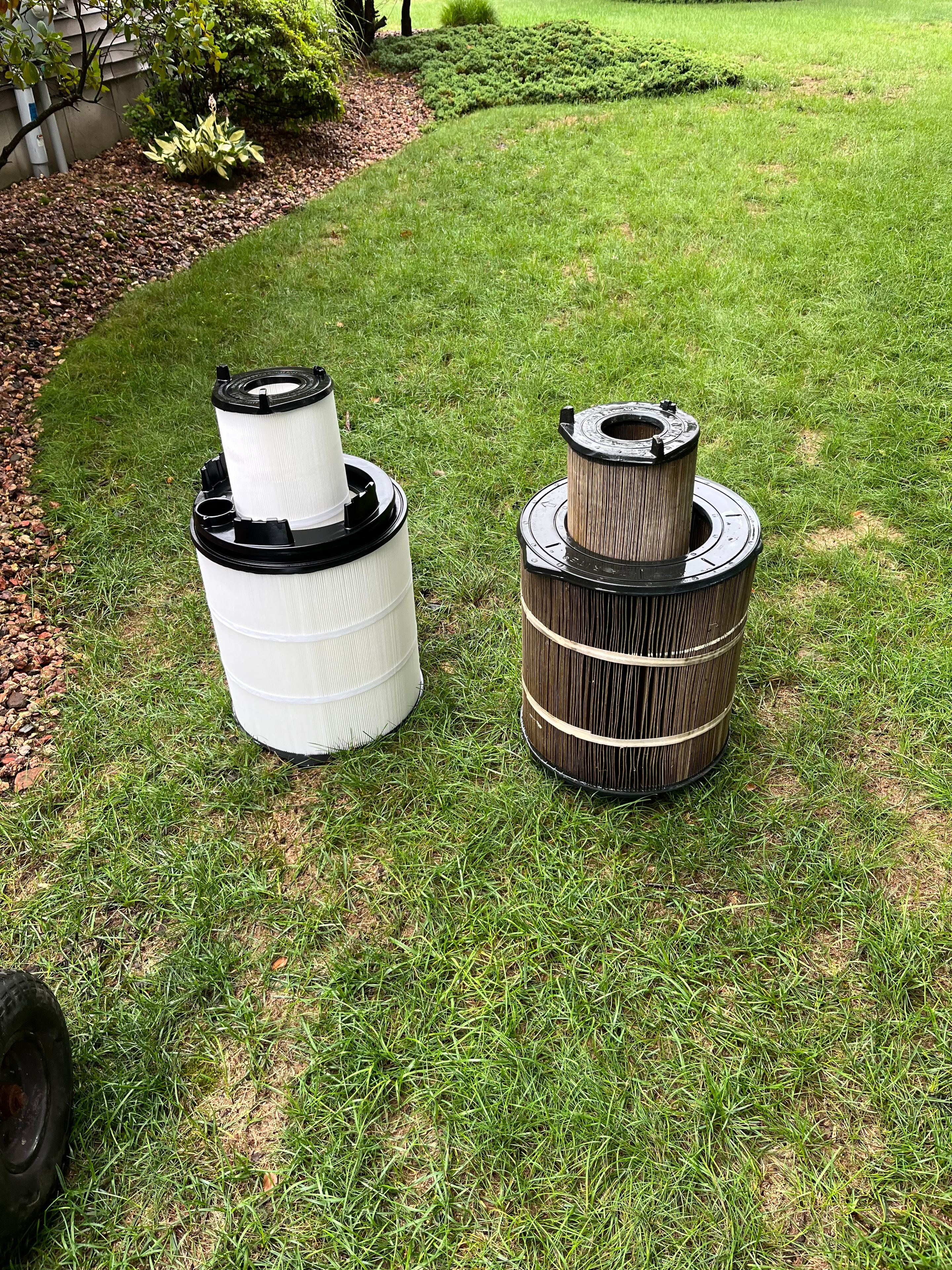
This Is What We're Talking About
These are real pool filters. The difference in flow rate, water clarity, and equipment strain between these two is enormous.
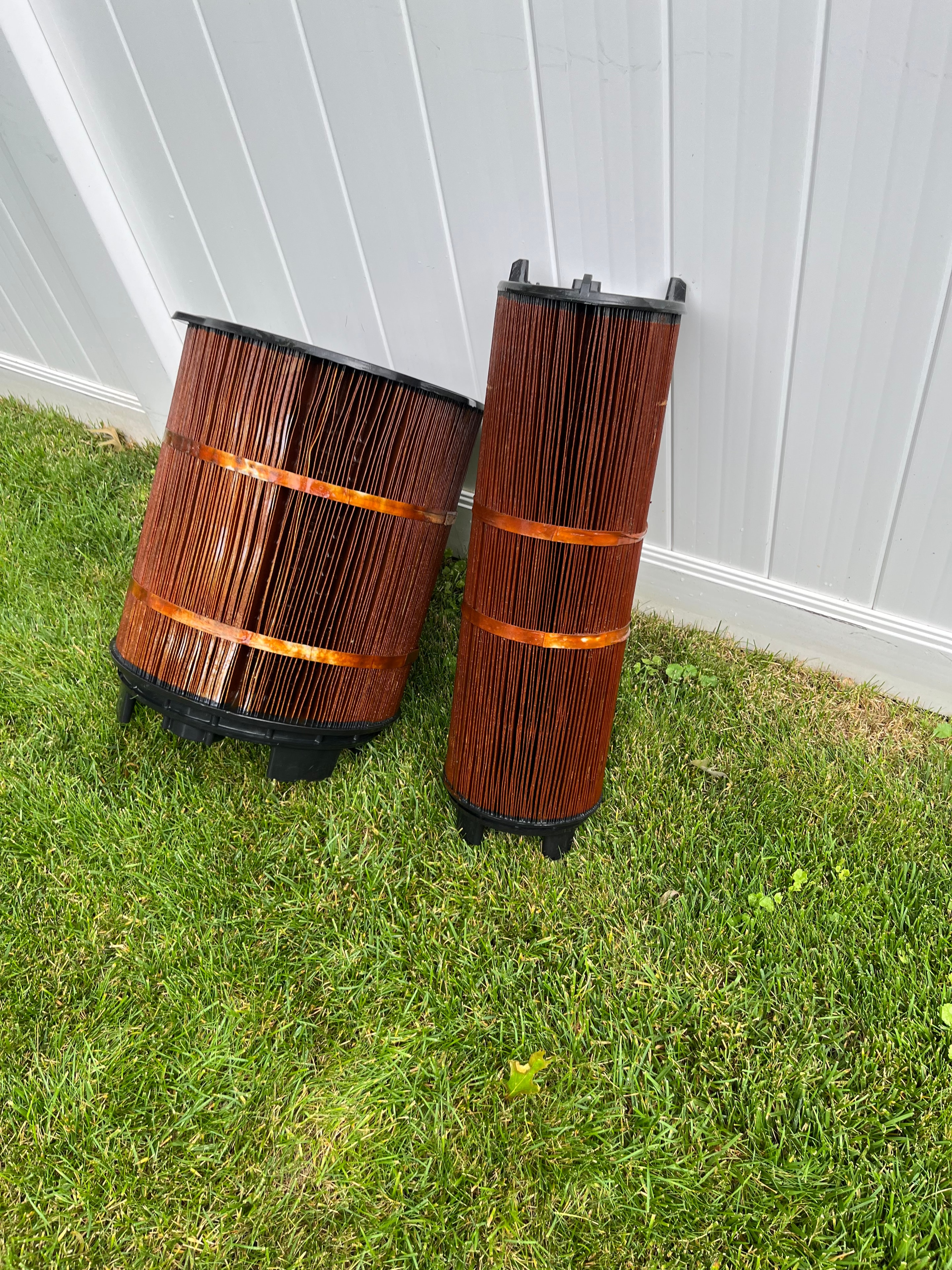
What a Dirty Filter Causes
- Cloudy, hazy water
- Algae blooms within days
- Heater flow errors & shutdowns
- Pump overheating & early failure
- Chemistry imbalance — chemicals can't work
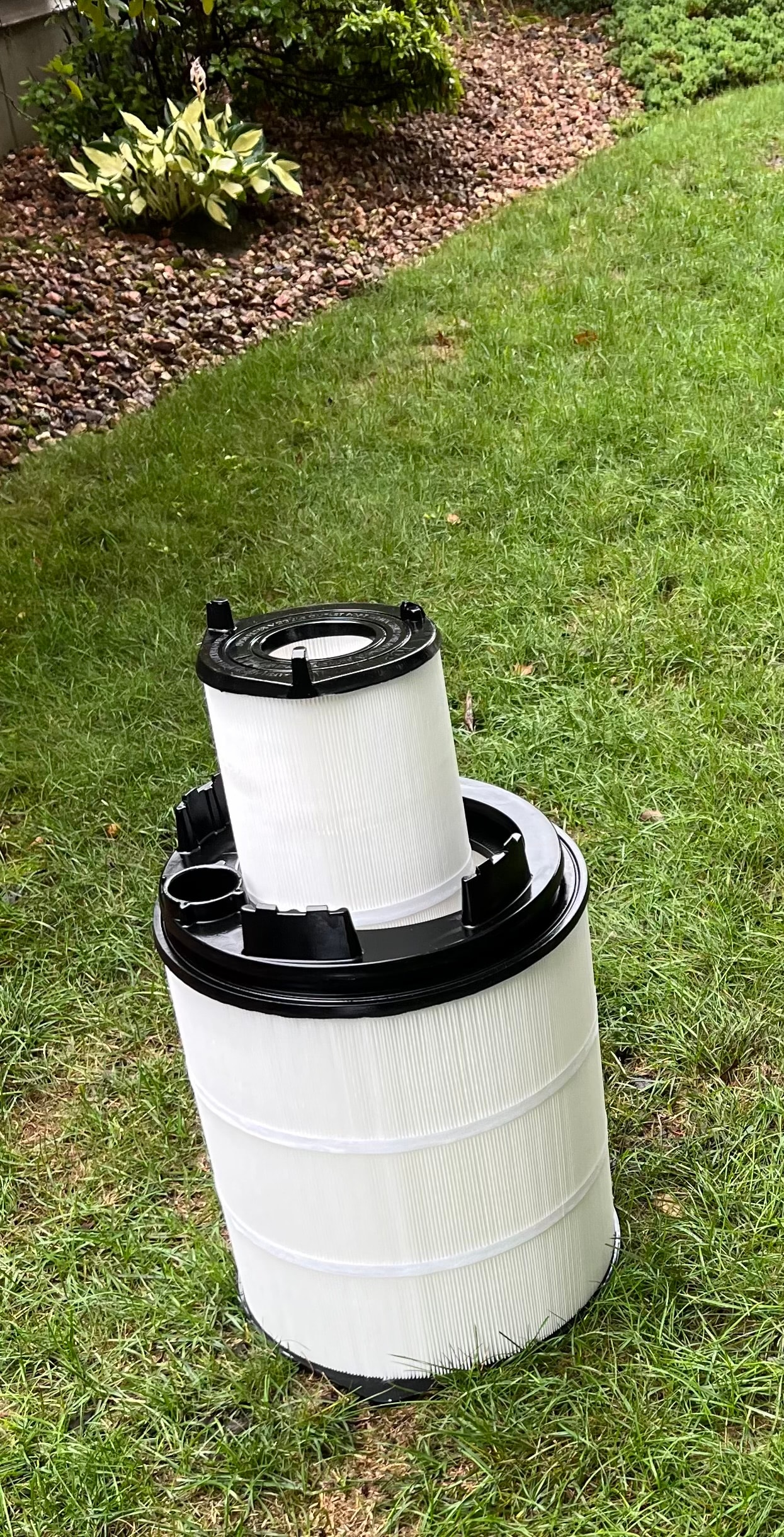
What a Clean Filter Delivers
- Crystal clear water all season
- Algae stays gone after treatment
- Heater fires reliably every time
- Pump runs cool and lasts longer
- Chemicals work at full effectiveness
Your Filter Is Telling You Something
Don't wait until the pool turns green. These are the signs your filter needs attention right now.
How to Clean Every Filter Type
Cartridge Filters
How to Clean
Remove the cartridge, rinse with a garden hose from top to bottom between each pleat. Soak in filter cleaner solution for 8–12 hours, then rinse thoroughly before reinstalling.
Frequency
Rinse weekly. Deep clean every 4–6 weeks. Replace every 1–3 seasons.
Important
Never use a pressure washer — it destroys the filter fabric and voids warranties.
Sand Filters
How to Clean
Set the multiport valve to "Backwash" and run until the sight glass runs clear (usually 2–3 minutes). Then set to "Rinse" for 30 seconds before returning to "Filter."
Frequency
Backwash weekly or when pressure rises 8–10 PSI above clean starting pressure.
Important
Sand should be replaced every 5–7 years. Old sand becomes channeled and stops filtering effectively.
DE (Diatomaceous Earth) Filters
How to Clean
Backwash until the sight glass clears, then add fresh DE powder through the skimmer (follow manufacturer's dosage). Fully break down and clean the grids 1–2 times per season.
Frequency
Backwash when pressure rises 8–10 PSI. Full teardown 1–2 times per season.
Important
Always wear a dust mask when handling DE powder — it is a respiratory irritant.
Backwashing Is Not Enough Forever
Sand filters are low-maintenance, but the sand itself wears out. Over years of use, the sharp edges of the sand grains become smooth and rounded — they stop trapping fine particles and water channels straight through without being filtered.
If your sand filter is more than 5–7 years old and you're still getting cloudy water after backwashing, the sand is likely the culprit. A sand change is a straightforward service call — and far cheaper than the equipment damage a failing filter causes.
Ask About a Sand Change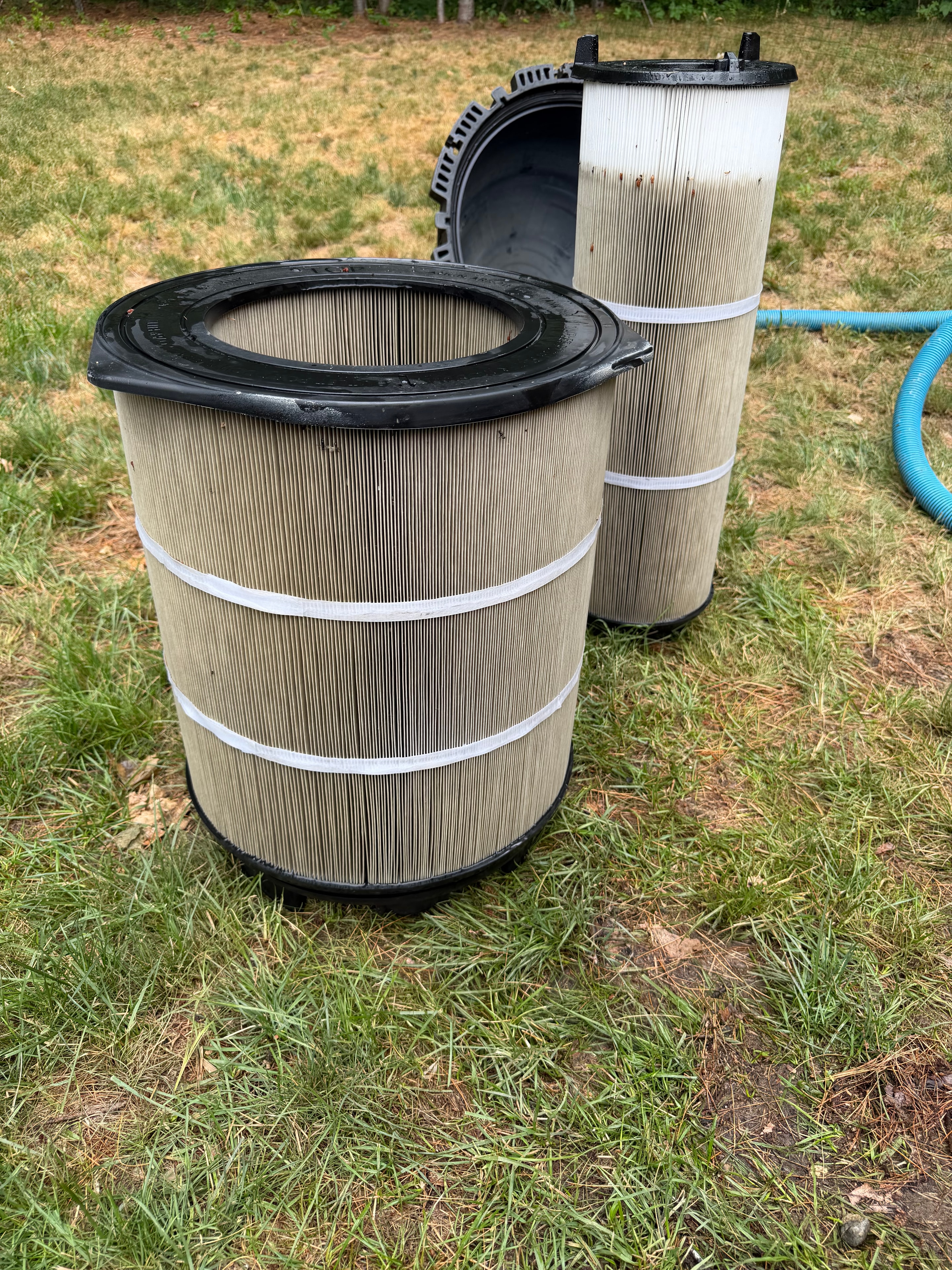
Filter Maintenance Schedule
| Filter Type | Weekly | Monthly | Replace / Rebuild |
|---|---|---|---|
| Cartridge | Rinse with hose | Soak in filter cleaner | Every 1–3 seasons |
| Sand | Backwash if pressure up | Check pressure baseline | Sand every 5–7 years |
| DE | Check pressure | Backwash + re-charge DE | Full teardown 1–2×/season |
Filter FAQ
QCan I just rinse my cartridge with a hose instead of soaking it?
Rinsing removes loose debris but does not remove the oils, sunscreen, and mineral scale that build up deep in the pleats. Over time, a filter that is only rinsed will become permanently clogged and need replacement much sooner. Soak in a dedicated filter cleaner solution at least once a month.
QMy pool is still cloudy after I cleaned the filter — why?
If the filter was heavily clogged, it may need a second deep clean or replacement. Also check that you rinsed all the cleaner solution out before reinstalling — residual cleaner can cause foaming and cloudiness. If the problem persists, call us — the issue may be chemistry or a failing filter element.
QHow do I know what my "clean" starting pressure is?
Check the pressure gauge immediately after installing a clean filter and note the reading — that is your baseline. Write it on a piece of tape and stick it near the equipment pad. When pressure climbs 8–10 PSI above that number, it is time to clean.
QIs it okay to run my pool without a filter for a day?
We strongly advise against it. Without filtration, bacteria and algae can establish within hours in warm water. Even a few hours of unfiltered circulation during peak swim season can set off a green pool event that takes days to correct.
Not Sure About Your Filter?
We inspect, clean, and service all filter types. If something isn't right, we'll tell you exactly what it needs — no guesswork.